

Why your joint pain keeps coming back (and what most people never try)
The real reason ibuprofen, ice packs, and physio only ever give temporary relief — and the 10-minute daily habit that's helping thousands of people with arthritis and chronic joint pain finally feel the difference.


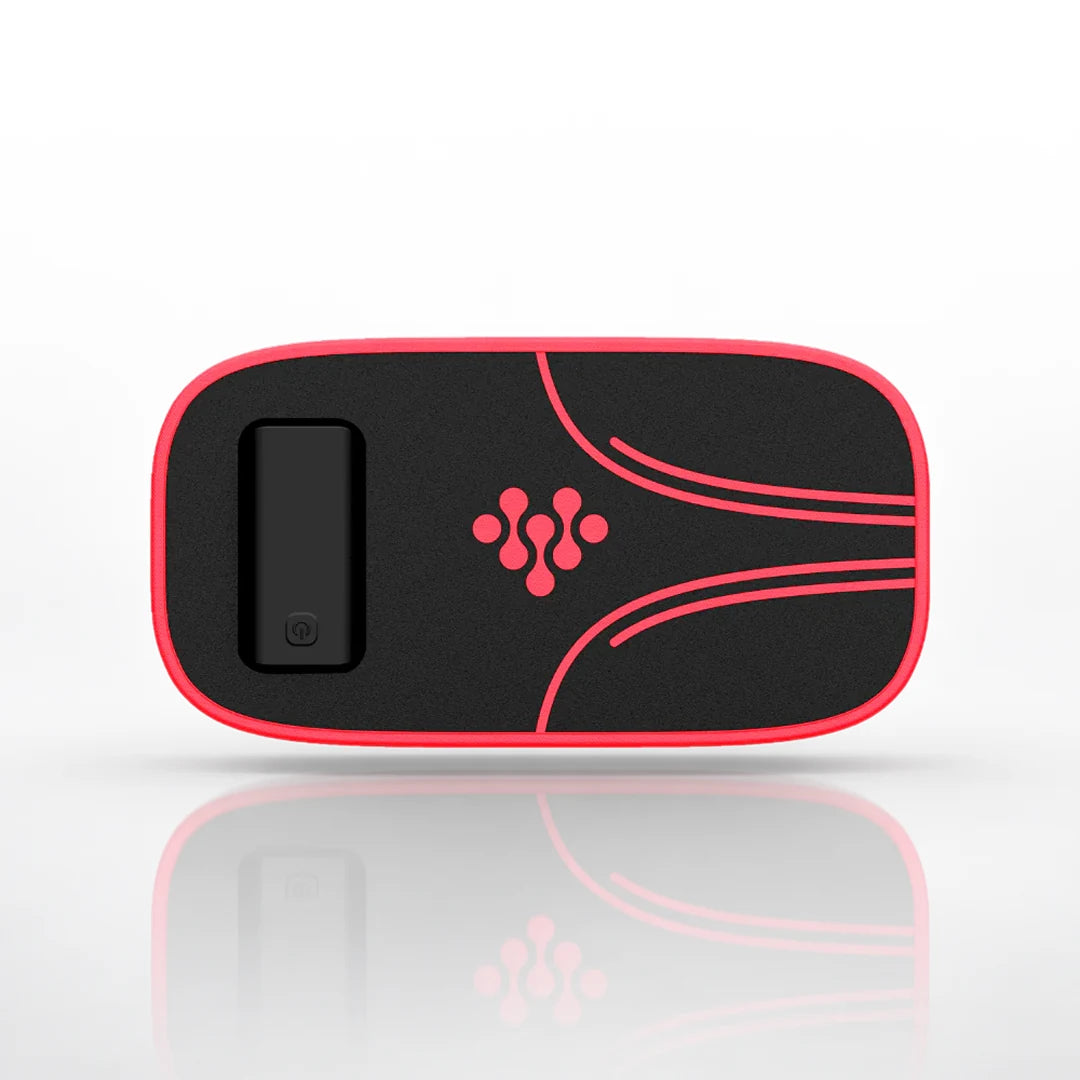
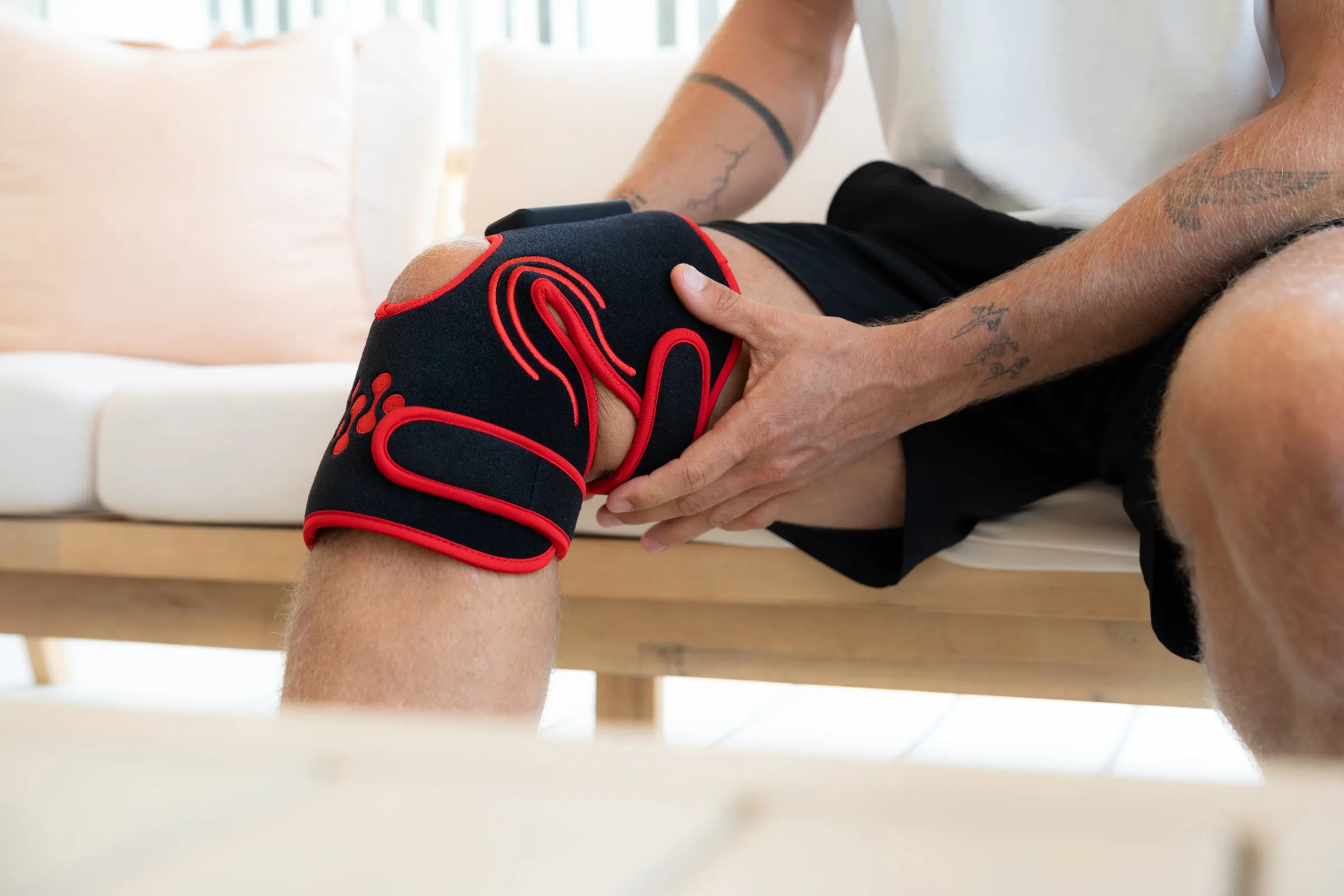
A wearable red light therapy device that wraps directly onto the joint that hurts — worn for 10–20 minutes a day, at home.
The daily routine
If you've had joint pain for years, you already know the routine
Wake up. Lie there for a minute before you try to move. Feel the stiffness in your knees, your hips, your back. Take something for it. Wait for it to ease off. Get on with your day. Then tomorrow, you do it all again.
You've probably tried a few things by now. Ibuprofen. Physio. Creams. Maybe a heat pack or an ice pack. Some of them help a little. None of them seem to actually fix anything.
And here's the thing nobody really tells you: that's not a coincidence.
The real problem
The problem with how we treat joint pain
Most joint pain — whether it's arthritis, osteoarthritis, or just chronic inflammation from years of wear — comes down to one underlying issue: inflammation that your body can't fully clear on its own.
Painkillers work by blocking the pain signal. They don't address the inflammation causing it. So the moment the medication wears off, the pain comes back. Because nothing changed underneath.
Ice packs reduce surface swelling temporarily. But they don't penetrate deep enough to reach the joint tissue where the inflammation actually lives. Physio helps with mobility and strength, but it's expensive, time-consuming, and the moment you stop going, you're back where you started.
This isn't to say these things are useless. They're not. But they're all working on the surface of the problem — not the source of it.
What's happening inside
What actually happens inside an inflamed joint
Inside an inflamed joint, your cells are under stress. They're not producing energy efficiently. Blood flow to the area is reduced. The natural repair processes your body uses to heal damaged tissue are running slow.
This is why joint pain tends to get worse over time, not better. It's not just 'wear and tear.' It's a cellular environment that's become chronically inflamed and under-resourced.
The good news is that this is exactly the kind of problem that responds to the right kind of stimulus.
The discovery
The technology that started with NASA
In the 1980s, NASA scientists discovered something unexpected while researching plant growth in space. The red and near-infrared light wavelengths they were using were also having a measurable effect on the astronauts working near the equipment. Wound healing was faster. Muscle soreness was reduced. Tissue repair was accelerating.
That discovery kicked off decades of research into what's now called photobiomodulation — the science of using specific wavelengths of red and near-infrared light to stimulate cellular function in the human body.
The mechanism is straightforward. When the light penetrates the skin and reaches your cells, it stimulates the mitochondria — the part of the cell responsible for producing energy. Cells that are producing more energy heal faster, reduce inflammation more effectively, and repair damaged tissue more efficiently.
Born in space
Discovered by NASA researching plant growth in orbit — then found to speed healing in the astronauts nearby.
Fuels your cells
Stimulates the mitochondria — the cell's energy source — so tissue repairs and inflammation clears faster.
Reaches the joint
Two specific wavelengths penetrate past skin and muscle, into the joint tissue where the inflammation lives.
The science
For people with joint pain, the findings have been significant
Studies published in the NIH and PubMed databases have measured what red and near-infrared light therapy does for osteoarthritis and chronic joint conditions.
Based on randomised controlled trials in patients with osteoarthritis and chronic joint conditions. Source: NIH, PubMed. These findings refer to the broader body of scientific literature on red and near-infrared light therapy and are provided for education. Individual results vary — see the full disclaimer below.
Clinical-grade, at home
The shift: clinical-grade therapy at home
For years, this technology was only available in clinical settings — physiotherapy clinics, sports medicine facilities, specialist recovery centres. A single session could cost $80–$150, and to see real results you'd need consistent sessions over weeks or months. Most people couldn't afford that.
Over the last several years, medical-grade red light therapy devices have become available for home use. Not the cheap, underpowered gadgets you see on Amazon that don't produce enough irradiance to actually reach joint tissue — but proper, clinical-grade devices that deliver the wavelengths and power output the research is based on.
The Infraredi Joint Wrap is one of them. It's a wearable red light therapy device — Medical Class IIA certified — that wraps directly onto the joint that hurts. Knee. Hip. Shoulder. Elbow. Back. Wherever the pain is, the wrap goes.
It delivers a combination of 660nm red light and 880nm near-infrared light — the two wavelengths with the strongest clinical evidence for joint pain and inflammation reduction — directly to the tissue that needs it. You wear it for 10–20 minutes a day. That's it.


Because the wrap is hands-free, the therapy happens while you live your life — reading, watching TV, having your morning tea.
The difference
What makes it different from everything else you've tried
The key difference is where the therapy reaches. Creams and gels work on the surface of the skin. Ice and heat packs work a little deeper. But red and near-infrared light at the right wavelengths can penetrate 5–10mm into tissue — reaching the joint capsule, the synovial membrane, the surrounding muscle and connective tissue.
That's where the inflammation lives. That's where the repair needs to happen.
The other difference is consistency without inconvenience. Because the Joint Wrap is wearable and hands-free, you can use it while you're doing something else — watching TV, having your morning tea, reading, working at your desk. The therapy happens while you live your life, not instead of it.
Reaches 5–10mm deep
Past the skin and muscle, into the joint capsule and synovial membrane — where the inflammation lives.
Hands-free & wearable
Strap it on and carry on. Wear it while you read, watch TV, or work — no sitting still in front of a panel.
Two clinical wavelengths
660nm red + 880nm near-infrared — the two wavelengths with the strongest evidence for joint pain.
Real stories
What people are actually experiencing
Over 25,000 customers and 905 reviews at 4.8 stars. Here's what some of them say, in their own words.
“I have severe hip and back arthritis and have had constant pain for years. Using the wrap every night on my back, hip and leg has made me pain free! I am amazed.”
“I had an issue with my elbow for about 6 weeks. Massages, a physio, sonic treatment — nothing made a difference. I purchased the Infraredi as a 'give it a go.' Used it for a week, about 30 minutes each time. Boom. No more pain. Converted.”
“I have medically confirmed bone on bone OA on one knee. I've been using it daily for 20 minutes on each knee for 4 weeks. I would say my knees feel like they have been taken back 3–5 years in the first 4 weeks.”
“My scepticism has been replaced by positivity as I can feel a big difference in my joints.”
“After 2 weeks of daily use, his knee pain has gone down from about a 5/10 constant to less than 1/10 sometimes, and the knee is 2cm smaller. Amazing really.”
“I don't like taking drugs to handle my joint or arthritis pain, so this is a great alternative. I believe after one month the infrared treatment is helping.”


These aren't cherry-picked. They're representative of a pattern we see consistently: people who were sceptical, who had tried other things, who weren't expecting much — and who were genuinely surprised by what happened.
The honest answer
Is it right for you?
The Infraredi Joint Wrap is designed for people dealing with:
The risk-free part
We know you're probably sceptical. That's reasonable.
If you've tried other things and they haven't worked, of course you're sceptical. That's exactly why we offer a 60-day risk-free trial.
Use the Joint Wrap every day for two full months. If you don't feel a meaningful difference in your joint pain — send it back. Full refund. No questions, no hassle.
We can offer that because we're confident in what the product does. And because we've seen what happens when people actually use it consistently.
Try the Infraredi Joint Wrap — 60-day risk-free trial
Free shipping. 3-year warranty. Medical Class IIA certified. Use it every day for 60 days — if it doesn't make a difference, send it back for a full refund.
Try the Infraredi Joint WrapIn the box
What you get
Questions
Frequently asked questions
Most people notice something within 2–4 weeks of consistent daily use. Some notice it sooner. Consistency is the key — the therapy compounds over time.
10–20 minutes per session is the recommended range. You can use it once or twice a day on the affected joint.
Yes — that's one of the main advantages. The wrap is hands-free and adjustable, so you can wear it while watching TV, reading, working at a desk, or going about your normal routine.
Yes. Red and near-infrared light therapy has been studied extensively and has no reported side effects in clinical trials. The Joint Wrap is Medical Class IIA certified. It is not a UV device and does not produce heat that can burn skin.
Send it back within 60 days for a full refund. No questions asked.
No. The key difference is irradiance — the amount of light energy actually delivered to the tissue. Cheap devices don't produce enough power to penetrate to joint depth. The Infraredi Joint Wrap is medical-grade, which means it delivers the irradiance levels the clinical research is based on.
Try the Infraredi Joint Wrap risk-free
60-day trial. Free shipping. 3-year warranty. Give your joints ten minutes a day and see the difference consistency makes.
Try the Infraredi Joint Wrap Risk-Free